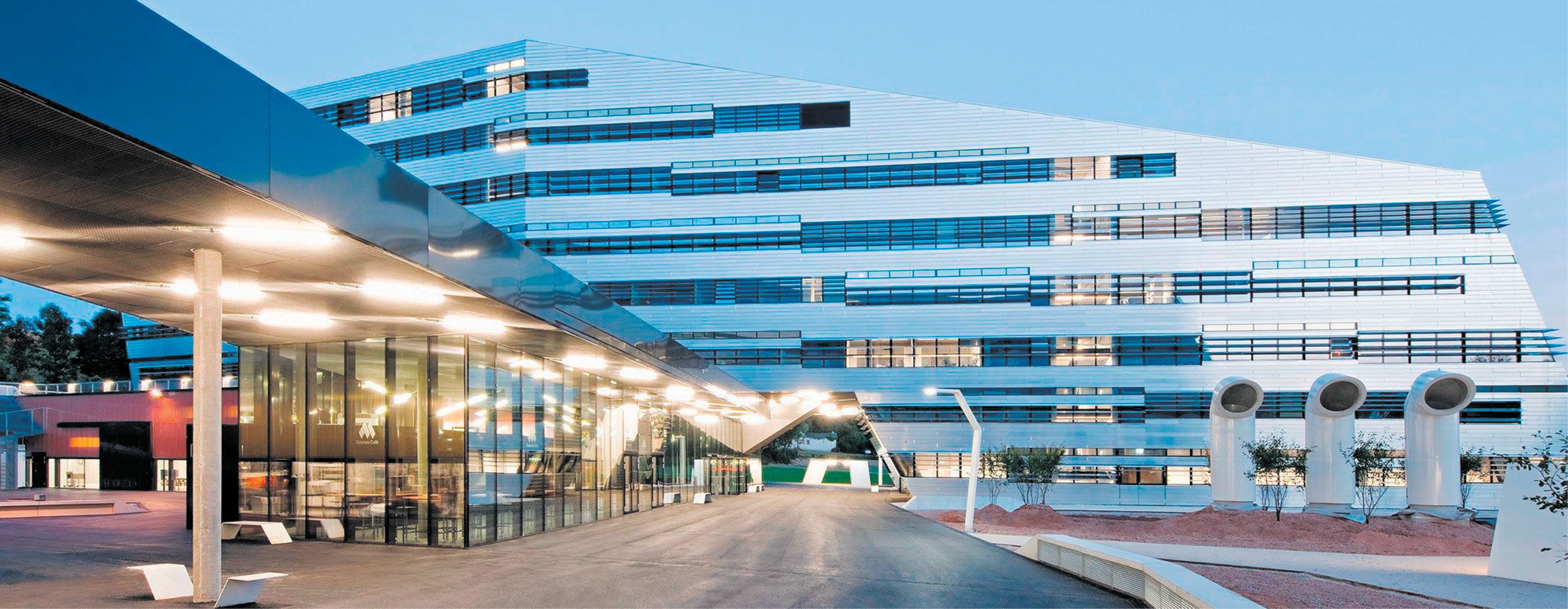
The Institute for Machine Learning conducts research and provides profound education in machine learning. Its research focuses on development of machine learning and statistical methods. We further apply these methods to various domains like medicine, drug discovery, autonomous driving, earth science, natural language processing, control and others. The institute is led by Sepp Hochreiter and is affiliated with Johannes Kepler University Linz and is also one of the founding units of European Lab for Learning and Intelligent Systems (ELLIS).
The Institute for Machine Learning is located in the beautiful city of Linz, Austria. Located near the amazing Austrian alps, the once European capital of culture mixes the right balance between nature and urban life. A part of the institute is also located in the city of Vienna, Austria.
news
| Our new work on compressing 5D plasma turbulence simulations is available on arXiv: Physics-Informed Neural Compression of High-Dimensional Plasma Data. See the blog post on PINC here: link |
| Paper accepted at NeurIPS 2025: GyroSwin: 5D Surrogates for Gyrokinetic Plasma Turbulence Simulations |
| Paper accepted at NeurIPS 2025: Parameter Efficient Fine-tuning via Explained Variance Adaptation |
| Paper accepted with oral talk at MIDL 2023: Learning Retinal Representations from Multi-modal Imaging via Contrastive Pre-training |
| Paper accepted with oral talk at AAAI 2023: Boundary Graph Neural Networks for 3D Simulations |
recent publications
- MHNfs: Prompting In-Context Bioactivity Predictions for Low-Data Drug DiscoveryJournal of Chemical Information and Modeling 2025
- Bio-xLSTM: Generative modeling, representation and in-context learning of biological and chemical sequencesIn The Thirteenth International Conference on Learning Representations 2025
- Potential predictors for deterioration of renal function after transfusionAnesthesia & Analgesia 2024